
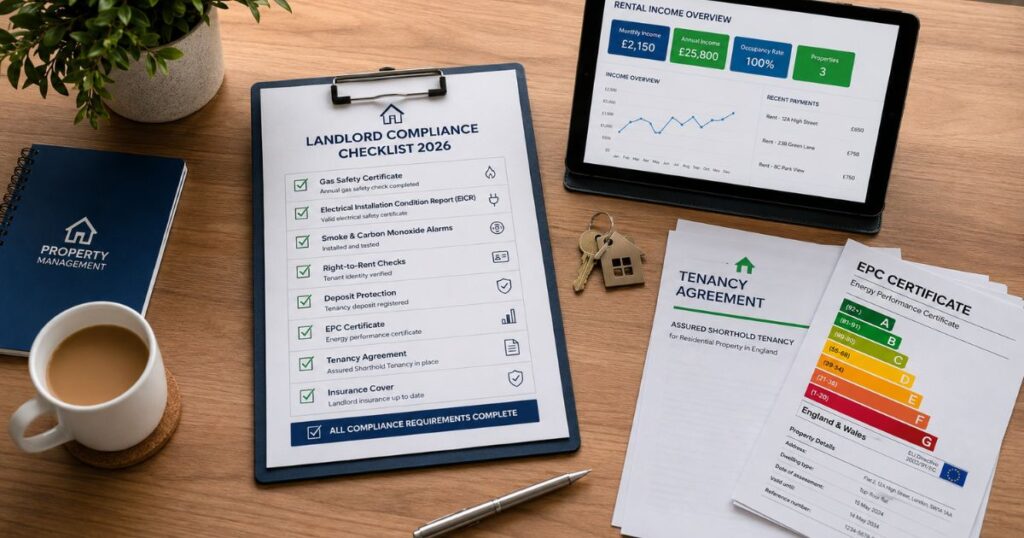

Learning how to rent out a property in the UK is about more than safety certificates and deposit protection. Those matter. But most beginner guides stop there.
They do not tell you about the £5,000-£15,000 EPC upgrade coming in 2028. Or the tax bill you cannot ignore. Or why standard home insurance leaves you unprotected the moment a tenant moves in.
Let me fix that. This guide covers the legal basics, then dives into the gaps most checklists miss: insurance, tax, real costs, and the self-manage vs agent decision.
Before you list your property, speak to a landlord management company that handles compliance, tenant finding, and ongoing maintenance or read on for a complete landlord checklist that protects your investment and your peace of mind.
Part 1: The Legal Basics (Quick Checklist)
Before any tenant moves in, tick these boxes. No exceptions.
| Requirement | Details | Cost (approx) |
| Mortgage or lease permission | Consent to let or buy-to-let mortgage | £0-£1,500 (product fee) |
| EPC certificate | Minimum rating E (C by 2028) | £60-£120 |
| Gas safety certificate | Annual, before tenancy starts | £60-£100 |
| EICR (electrical report) | Every 5 years | £150-£300 |
| Deposit protection | Within 30 days (DPS, TDS, MyDeposits) | Free (deposit amount needed) |
| “How to Rent” guide | Give to tenant before move-in | Free (download from gov.uk) |
| Right to Rent checks | Passport, share code, or biometric permit | Free |
| Written tenancy agreement | Signed by both parties | £200-£500 (solicitor) |
Miss any of these and you cannot serve a valid Section 21 eviction notice. Tenants can also claim compensation up to three times the deposit amount if you fail to protect it.
Part 2: Landlord Insurance (Do Not Skip This)
Standard home insurance does not cover tenancies. If a tenant causes a flood or a fire, your policy will not pay out.
You need specialist landlord insurance. Most policies include:
- Buildings insurance (essential for flats and houses)
- Public liability insurance (covers you if a tenant is injured)
- Loss of rent cover (pays out if the property becomes uninhabitable)
Optional but highly recommended:
- Rent guarantee insurance (covers you if the tenant stops paying)
- Legal expenses cover (helps with eviction costs)
| Insurance Type | Typical Annual Cost |
| Basic landlord buildings + liability | £150-£300 |
| Including rent guarantee | £200-£400 |
| Including legal expenses | £250-£500 |
Shop around. Compare at least three quotes. Do not assume your existing home insurer offers the best deal.
Part 3: Tax Obligations Every Landlord Must Know
Rental income is taxable. You must report it to HMRC.
Key tax facts for new landlords:
- Complete a Self Assessment tax return every year (deadline 31 January)
- You can deduct allowable expenses: letting agent fees, repairs, insurance, utility bills you pay
- Mortgage interest relief is restricted to a 20% tax credit (not a full deduction since 2017)
- When you sell the property, you may owe Capital Gains Tax on the profit
Example: You earn £15,000 rental income in a tax year. Allowable expenses are £5,000. Your taxable profit is £10,000. As a basic rate taxpayer (20%), you owe £2,000 in tax.
Do not ignore this. HMRC has sophisticated data matching. They will find unreported rental income. Penalties start at 30% of the tax owed.
Part 4: The Real Cost of Becoming a Landlord
Here is what new landlords actually spend in their first year.
| Cost Category | Typical Amount |
| Safety certificates (EPC, gas, EICR) | £270-£520 |
| Landlord insurance (first year) | £150-£500 |
| Letting agent fees (if used) | 8-15% of monthly rent |
| Legal fees (tenancy agreement, advice) | £200-£500 |
| Deposit (held, not spent) | 5 weeks’ rent |
| Initial repairs / refurbishment | £500-£5,000+ |
| HMO licence (if applicable) | £750-£1,500 |
First-year total (low end): £1,500-£2,500 plus deposit
First-year total (high end): £5,000-£10,000 plus deposit
Be honest with your budget before you commit.
Part 5: Letting Agent vs Self-Managing
This decision affects your time, stress, and profit.
| Factor | Self-Managing | Using a Letting Agent |
| Cost | Lower (no agent fees) | Higher (8-15% of monthly rent) |
| Time commitment | High | Low |
| Legal compliance risk | Higher (you are responsible) | Lower (agent should handle) |
| Tenant finding | You advertise and vet | Agent handles |
| Maintenance coordination | You manage tradespeople | Agent handles |
| Eviction handling | You manage the process | Agent can assist |
| Best for | Local landlords with 1-2 properties | Remote landlords, portfolios, busy professionals |
If you self-manage: Use OpenRent or similar platforms to find tenants. Get referencing done professionally (costs £20-£50 per tenant). Keep meticulous records.
If you use an agent: Check they are registered with a Client Money Protection scheme (protects your rent if the agent goes bust). Ask if they are members of The Property Ombudsman or PRS.
Part 6: Ongoing Responsibilities After Move-In
Your duties do not stop when the tenant moves in.
| Responsibility | Frequency |
| Gas safety check | Annually (must give tenant a copy) |
| Electrical inspection (EICR) | Every 5 years |
| EPC | Valid for 10 years (C rating needed by 2028) |
| Smoke and CO alarm checks | At start of each tenancy |
| Right to Rent rechecks | Only if tenant’s visa expires during tenancy |
| Property inspections | Every 3-6 months (24 hours’ written notice required) |
| Repairs | Promptly (heating, water, structural issues are urgent) |
Upcoming change: The government proposes raising the minimum EPC rating to C for new tenancies from 2028. Upgrade costs typically range from £5,000 to £15,000 per property. Start budgeting now.
Final Thoughts
Learning how to rent out a property in the UK takes time. The legal checklist is essential but not enough. You also need proper insurance, awareness of your tax obligations, a realistic budget, and a clear decision on self-managing vs using an agent.
Do not rush. Get your safety certificates first. Protect the deposit within 30 days. Check every tenant’s Right to Rent. Keep detailed records of everything.
Explore property rental management services and compare landlord insurance quotes before your tenant moves in a few hours of preparation saves thousands of pounds later.
For more landlord guides and compliance updates, visit reputable resources like the NRLA (National Residential Landlords Association) or Gov.uk.