

In the world of wearable branding and collectible merchandise, enamel pins have evolved far beyond simple accessories. Designers, artists, startups, schools, and businesses across Singapore are increasingly using personalised enamel pins to communicate identity, celebrate milestones, and create memorable visual experiences. From fashion labels and cafés to gaming communities and corporate campaigns, enamel pins now serve as both artistic expression and strategic branding tools.
Yet one question continues to challenge first-time buyers and experienced designers alike: should you choose soft enamel or hard enamel?
At first glance, both styles may appear similar. They can share the same shape, plating, colors, and overall concept. However, the manufacturing process, texture, durability, and final appearance differ significantly. Understanding those differences is essential when creating pins that align with your audience, purpose, and aesthetic vision.
This guide breaks down the anatomy of enamel pins and explains how soft enamel and hard enamel compare in terms of style, finish, functionality, and design impact.
Understanding How Enamel Pins Are Made
Before comparing the two styles, it helps to understand the basic structure of enamel pins.
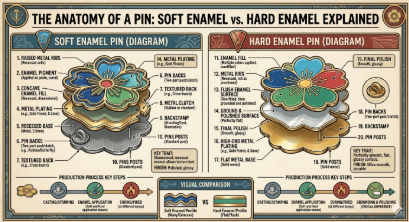
Most enamel pins begin with a metal base that is stamped or die-struck into a specific shape. Raised metal edges are created to separate colors and define details. Enamel color is then filled into recessed areas before the pin is polished, plated, and finished.
The main difference between soft and hard enamel lies in what happens after the enamel is applied.
- Soft enamel pins retain recessed enamel areas beneath the raised metal lines.
- Hard enamel pins are polished flat until the enamel and metal sit on the same level.
That small production difference completely changes the look and feel of the final product.
What Are Soft Enamel Pins?
Soft enamel pins are known for their textured finish and vibrant color appearance. The enamel sits slightly lower than the metal borders, creating a tactile surface that users can physically feel.
Key Characteristics of Soft Enamel Pins
- Raised metal edges
- Recessed enamel filling
- Highly detailed appearance
- Bold and vibrant colors
- Textured surface
- More affordable production cost
Because of their dimensional texture, soft enamel pins often appear more dynamic and visually striking under light. This makes them especially popular among illustrators, streetwear brands, musicians, and independent creators.
Why Designers Choose Soft Enamel
One major advantage of soft enamel is design flexibility. The recessed finish allows for intricate detailing and stronger contrast between metal lines and colors. Designers who want a playful, artistic, or expressive appearance often gravitate toward this style.
For example, cartoon-inspired graphics, mascot characters, pop culture references, and layered artwork typically translate exceptionally well into soft enamel.
Soft enamel is also commonly used for:
- Event merchandise
- Artist collaborations
- Gaming fandom collectibles
- Fashion accessories
- Promotional giveaways
- Creative startup branding
In markets like Singapore, where lifestyle branding and visual identity play a major role in consumer engagement, soft enamel pins are frequently chosen for their modern and eye-catching appeal.
What Are Hard Enamel Pins?
Hard enamel pins are polished repeatedly until the enamel and metal become completely flush. The result is a smooth, glossy surface with a refined, premium appearance.
These pins are often compared to jewelry because of their sleek finish and polished feel.
Key Characteristics of Hard Enamel Pins
- Smooth and flat surface
- Durable finish
- Elegant appearance
- Scratch-resistant coating
- Slightly muted but sophisticated colors
- Premium production quality
Unlike soft enamel, hard enamel does not have raised textures. Running a finger across the pin feels completely smooth from edge to edge.
Why Designers Choose Hard Enamel
Hard enamel pins are ideal for projects that require a polished, professional, or luxury aesthetic. They are frequently selected for official branding, commemorative items, and high-end merchandise collections.
Their durability also makes them suitable for long-term use on bags, jackets, uniforms, and accessories.
Common uses include:
- Executive gifts
- Luxury brand merchandise
- School emblems
- Government insignias
- Formal recognition awards
- Premium corporate lapel pins
Because hard enamel pins communicate sophistication and quality, many businesses use them when representing professionalism and prestige.
Texture vs. Smoothness: The Biggest Visual Difference
The most immediate distinction between soft and hard enamel is texture.
Soft enamel pins feature raised metal outlines that create depth and dimension. This tactile quality enhances visual contrast and makes colors appear especially vibrant.
Hard enamel pins, by comparison, are sleek and flat. Their smooth finish reflects light evenly and produces a clean, refined appearance.
Choose Soft Enamel If You Want:
- A handcrafted or artistic feel
- More visible metal detailing
- Bold and vibrant color contrast
- Textured interaction
- A playful or trendy aesthetic
Choose Hard Enamel If You Want:
- A smooth jewelry-like finish
- A premium and professional look
- Higher perceived value
- Greater durability
- Elegant branding presentation
The decision often depends on how the pin will be used and how the audience should perceive it.
Durability and Longevity
Both pin styles are durable, but hard enamel generally offers greater resistance to scratches and wear.
Because hard enamel pins are polished flat and sealed more thoroughly, they can better withstand frequent handling and long-term use. Their smooth surface also makes them less prone to dirt buildup.
Soft enamel pins remain durable but may show wear faster due to their recessed areas and textured finish.
That said, many collectors actually prefer the tactile quality of soft enamel because it feels more authentic and artistic.
Color Appearance and Design Detail
Soft enamel typically produces brighter and more vivid colors because the recessed enamel catches shadows and highlights differently.
Hard enamel colors appear smoother and slightly more refined. While still vibrant, they often look cleaner and more controlled due to the polishing process.
Soft Enamel Works Best For:
- Bold illustrations
- Streetwear graphics
- Youth-focused branding
- Creative artwork
- Highly detailed line work
Hard Enamel Works Best For:
- Minimalist logos
- Elegant iconography
- Institutional branding
- Formal emblems
- Professional merchandise
Designers should also consider how small details will appear after production. Fine lines and tiny typography may behave differently depending on the enamel style selected.
Cost Differences Between Soft and Hard Enamel
Soft enamel pins are generally more affordable because the manufacturing process involves fewer polishing stages.
Hard enamel requires additional labor, polishing, and finishing work, which increases production cost.
For brands ordering in bulk, this price difference can become significant.
Soft Enamel Is Often Better For:
- Large promotional campaigns
- Startup merchandise
- Event giveaways
- Budget-conscious projects
Hard Enamel Is Often Better For:
- Executive merchandise
- Collector-grade products
- Premium brand campaigns
- Long-lasting recognition items
Budget should never be the only deciding factor, but understanding production costs helps align creative vision with practical expectations.
Enamel Pins Beyond Fashion
Enamel pins are no longer limited to streetwear or collector culture. Businesses and organizations are increasingly integrating custom pins into broader branding ecosystems.
For example, many companies now combine personalised enamel pins with products like stickers, packaging inserts, embroidered patches, and even personalised challenge coins for events and commemorative campaigns.
Challenge coins, in particular, share similarities with enamel pins because both rely on metal craftsmanship, symbolic design, and collectible appeal. While challenge coins often carry ceremonial or recognition value, enamel pins offer greater versatility for everyday wear and community engagement.
This crossover between branding tools demonstrates how collectible merchandise continues to shape modern identity design.
Which Option Is Right for Your Project?
There is no universal winner between soft and hard enamel. The right choice depends entirely on your goals, audience, and design style.
If your project prioritizes energy, texture, creativity, and vibrant visual impact, soft enamel may be the better fit.
If you want elegance, durability, sophistication, and a polished finish, hard enamel likely makes more sense.
Many experienced designers even use both styles for different collections:
- Soft enamel for casual or artistic releases
- Hard enamel for premium editions and official merchandise
The most successful enamel pin designs begin with a clear understanding of the brand story they are meant to represent.
Final Thoughts
Enamel pins may be small, but the design decisions behind them are surprisingly detailed. From texture and finish to durability and presentation, every production choice influences how the final product is perceived.
As demand for personalised enamel pins continues to grow in Singapore and beyond, understanding the difference between soft and hard enamel becomes increasingly valuable for designers, creators, and organizations alike.
Soft enamel offers bold personality and tactile depth. Hard enamel delivers elegance and refinement. Both have a distinct place within modern branding and collectible culture.
Choosing the right one is less about which style is “better” and more about which one best communicates the story behind the pin.