

Lorem ipsum dolor sit amet, consectetuer adipiscing elit, sed diam nonummy nibh euismod tincidunt ut laoreet dolore magna aliquam erat volutpat. Ut wisi enim ad minim veniam, quis nostrud exerci tation ullamcorper suscipit lobortis nisl ut aliquip ex ea commodo consequat. Duis autem vel eum iriure dolor in hendrerit in vulputate velit esse molestie consequat, vel illum dolore eu feugiat nulla facilisis at vero eros et accumsan. Nam liber tempor cum soluta nobis eleifend option congue nihil imperdiet doming id quod mazim placerat facer possim assum. Typi non habent claritatem insitam; est usus legentis in iis qui facit eorum claritatem. Investigationes demonstraverunt lectores legere me lius quod ii legunt saepius.
Lorem ipsum dolor sit amet, consectetuer adipiscing elit, sed diam nonummy nibh euismod tincidunt ut laoreet dolore magna aliquam erat volutpat. Ut wisi enim ad minim veniam, quis nostrud exerci tation ullamcorper suscipit lobortis nisl ut aliquip ex ea commodo consequat.
Nam liber tempor cum soluta nobis eleifend option congue nihil imperdiet doming id quod mazim placerat facer possim assum. Typi non habent claritatem insitam; est usus legentis in iis qui facit eorum claritatem. Investigationes demonstraverunt lectores legere me lius quod ii legunt saepius. Duis autem vel eum iriure dolor in hendrerit in vulputate velit esse molestie consequat, vel illum dolore eu feugiat nulla facilisis at vero eros et accumsan
Read More: Gelboodu
The Origin Story: Cicero and the Philosophy of Pain
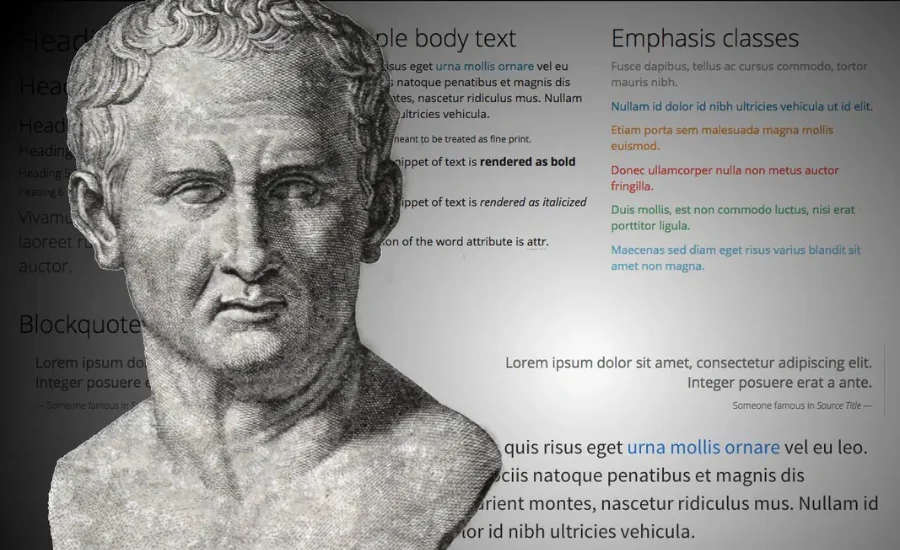
To understand where Lorem ipsum comes from, you need to travel back to 45 BC and the villa of one of Rome’s greatest orators and political philosophers. Marcus Tullius Cicero lawyer, consul, statesman, and prolific writer was going through a profoundly difficult period in his life. His daughter Tullia had recently died. He had been forced out of Roman political life. In the grief and enforced retirement that followed, he turned to philosophy with extraordinary productivity, producing a series of works in rapid succession that remain influential to this day.
One of those works was De Finibus Bonorum et Malorum “On the Ends of Good and Evil” a dialogue exploring the nature of the good life as understood by different philosophical schools. In Book I, Cicero’s character presents and argues against the Epicurean position that pleasure is the highest good and pain the greatest evil. The passage that would eventually become Lorem ipsum is part of this argument. Cicero writes, in the original Latin, that no one loves, pursues, or desires pain for its own sake merely because it is pain. The argument is that rational people seek pain only when it serves a greater end that the suffering of practice, effort, or discipline is chosen because of the reward it produces, not for its own sake.
The Original Cicero Compared to the Lorem Ipsum Version Cicero’s original (De Finibus, Book I, §32):
“Neque porro quisquam est qui dolorem ipsum quia dolor sit amet, consectetur, adipisci velit, sed quia non numquam eius modi tempora incidunt ut labore et dolore magnam aliquam quaerat voluptatem.”
Translation: “Nor is there anyone who loves, pursues, or desires pain itself because it is pain, but because on occasion circumstances arise such that through labour and pain he might seek some great pleasure.”
Lorem ipsum version:
“Lorem ipsum dolor sit amet, consectetur adipiscing elit, sed do eiusmod tempor incididunt ut labore et dolore magna aliqua…”
Notice “dolorem ipsum” in Cicero becoming “Lorem ipsum” the “de” at the end of the preceding word was absorbed, the word order scrambled, and the passage truncated to remove any coherent meaning while preserving Latin letter patterns.
The transformation from Cicero’s philosophical prose to Lorem ipsum involved deliberate scrambling. Words were moved out of their original sequence. Grammatical endings were altered. Some passages were combined with text from slightly different sections. The result preserved none of the original’s meaning a reader who knew Latin would recognise individual words but find the text grammatically incoherent while maintaining the visual pattern of Latin: its characteristic word lengths, the distribution of vowels and consonants, and the rhythm of a classical sentence. This was precisely the point. Whoever created the scrambled version understood that the visual texture of text matters for layout purposes, and classical Latin text has a texture close enough to modern European languages to serve as a convincing stand-in.
Who Made It and When: The Historical Timeline
The precise moment at which someone first scrambled Cicero’s text into the Lorem ipsum we know today remains uncertain. What is documented is the text’s presence in the printing industry from at least the fifteenth century — possibly appearing in type specimen books used by early printers after Gutenberg’s invention of movable type. These books, which printers used to display their typefaces to potential customers, needed example text that would show how the font looked on the page. Latin was the prestige language of European print culture, and a passage from Cicero provided authoritative-looking text that any educated customer would recognise as classical without necessarily reading it closely.
Marcus Tullius Cicero writes De Finibus Bonorum et Malorum. The passage that will become Lorem ipsum is part of Book I, §32–33, arguing against Epicurean hedonism.A printer, identity unknown, is believed to have scrambled the Cicero text for use in a type specimen book. The earliest documented appearance of the Lorem ipsum text in the form we recognise today dates to this period, though the exact publication has not been definitively identified.
Letraset Corporation, a British company producing dry-transfer lettering for designers, includes Lorem ipsum on its sheets. Graphic designers working by hand before computers use Letraset letters to mock up layouts, and Lorem ipsum becomes their standard filler text.Aldus Corporation releases PageMaker, the desktop publishing software that brings professional layout tools to personal computers. PageMaker includes Lorem ipsum as its default placeholder text, exposing it to an entirely new generation of designers working digitally for the first time.
Why Lorem Ipsum Works: The Typography Behind the Choice
The question that might seem obvious why use scrambled Latin rather than any other text actually has a thoughtful answer that reveals how carefully the original choice was made. The purpose of placeholder text is to allow a designer to see how a layout will look with text in it, without the text itself distracting from the visual assessment. If the placeholder text were readable, engaging content a news story, for example, or an interesting anecdote a viewer looking at the layout would start reading the words instead of evaluating the design. The brain naturally gravitates toward meaningful content when it is available.
Lorem ipsum solves this problem elegantly. Its words look like Latin but make no grammatical sense in their scrambled form, so readers cannot engage with them meaningfully. The eye and brain register “text is present” and “the text has the visual texture of a real language” without being drawn into reading it. This leaves the viewer free to assess what a designer actually needs assessed: type size, line spacing, column width, the visual weight of different text blocks, and how the overall layout feels with content in it.
Why the Letter Distribution Matters Classical Latin and modern European languages particularly English, French, Italian, Spanish, and German share similar patterns in how frequently different letters appear. The letter ‘e’ is the most common in all of them. Short words and common consonant combinations follow similar patterns. Because Lorem ipsum is derived from actual Latin rather than randomly generated characters, its letter distribution and word-length pattern mimic real text more convincingly than random strings would. A layout that looks good with Lorem ipsum will therefore look appropriately similar with real European-language text inserted which is the designer’s entire goal.
Lorem Ipsum in Design Software: Built In Everywhere
The near-universal adoption of Lorem ipsum by design and publishing software is both the reason for its continued dominance and a reflection of how thoroughly it has been standardised across industries. In Adobe InDesign the professional typesetting software used by book publishers, magazine designers, and newspapers worldwide Lorem ipsum text can be inserted with a single menu command. In Figma, the popular browser-based design tool used by UX and product designers, Lorem ipsum appears as the default text in placeholder elements. In Sketch, Adobe XD, Affinity Publisher, and virtually every other design application, the text is either built in directly or accessible through a plugin.
Web development frameworks and content management systems have also embraced it. WordPress, the platform powering a substantial proportion of the world’s websites, includes Lorem ipsum in its default post content and in theme previews. Bootstrap, the most widely used front-end web framework, uses Lorem ipsum in its documentation examples. The text appears in starter templates, theme demos, and sample projects across the entire web development ecosystem, ensuring that any developer who has ever built a website has encountered it.
Purpose and Benefits: What Lorem Ipsum Actually Solves
The practical value of Lorem ipsum for anyone working on visual communication cannot be overstated. Before a piece of writing has been composed, edited, and finalised which in most professional workflows happens after the design has been established designers need something to fill the spaces where text will eventually go. The alternative to placeholder text is leaving spaces blank, which makes a layout impossible to evaluate properly because the visual weight of text is a fundamental part of how a design reads.
Using Lorem ipsum allows designers and clients to separate two distinct phases of a project: the visual and typographic decisions, and the content decisions. This separation is genuinely useful because the people who make design decisions and the people who write content are often different individuals working on different timelines. A layout can be approved visually using Lorem ipsum before the copywriter has finished the first draft, preventing delays in the design process and allowing both streams of work to proceed in parallel rather than sequentially.
There is also a psychological benefit to using clearly non-meaningful placeholder text rather than real content during design reviews. When a client reviews a layout with Lorem ipsum, they focus on the design elements the font choices, the colour palette, the spatial relationships between elements. When a layout contains real text even draft text clients often read it and comment on the words rather than the design, derailing the review conversation into content discussions before the visual decisions have been finalised.
Criticisms and Challenges: When Lorem Ipsum Causes Problems
Despite its near-universal adoption, Lorem ipsum is not without critics, and those critics make some substantive points. The central argument against Lorem ipsum is that using placeholder text that looks convincingly like real content can lead to design decisions that do not survive contact with actual words. A layout that is beautifully balanced with three short Lorem ipsum paragraphs may fall apart visually when those paragraphs are replaced with real copy that runs twice as long, or half as long, as the placeholder text.
This concern is particularly acute in web design and UX design, where content varies dynamically depending on user behaviour, database content, and localisation requirements. A design that works with Lorem ipsum across three neat columns may break badly when one column contains a very short headline and another contains a very long one. The “content-first” movement in UX design specifically argues that designers should work with real or at least realistic content from the earliest stages of a project, precisely to avoid the false security that Lorem ipsum can create.
The Case Against Lorem IpsumThe false balance problem: Lorem ipsum paragraphs are consistent in length. Real paragraphs are not. Layouts designed around identical placeholder blocks can break when content varies naturally.
The readability illusion: Lorem ipsum looks like Latin text but makes no reading sense. Testing how typography reads with real words is not the same as testing it with scrambled pseudo-text.
The stakeholder confusion problem: Clients unfamiliar with design practice sometimes mistake Lorem ipsum for a foreign language, or assume the design is incomplete in ways that go beyond the placeholder text.
The accessibility gap: Screen reader testing with Lorem ipsum is not the same as testing with real content. Accessibility decisions heading hierarchy, link text, alt text need real content to be evaluated properly.
Lorem Ipsum Generators: The Online Tool Ecosystem
The most common reason people search for “Lorem ipsum” online is simply to get more of it — to generate a specific quantity of placeholder text for a project they are working on. A thriving ecosystem of Lorem ipsum generator tools has developed over the past two decades to serve this need, ranging from simple single-page websites to sophisticated APIs that integrate with design software.
The most established is lipsum.com, which has been generating Lorem ipsum paragraphs since the early days of the web and receives substantial traffic. It offers simple controls for specifying the number of paragraphs, words, bytes, or lists needed. Similar services operate at loremipsum.io, lorem.app, and dozens of other domains. Many integrate directly with design tools through plugins or browser extensions, allowing designers to generate placeholder text without leaving their work environment.
Beyond the standard Lorem ipsum text, generator tools have also experimented with alternatives that insert readable content where the placeholder text would normally go. Some generate subject-specific placeholder text relevant to the design context. Others use famous literary passages. The variety of generator tools available reflects just how central the need for placeholder text has become to the modern design workflow.
Alternatives to Lorem Ipsum: A Growing Catalogue
The design and development community has produced numerous alternatives to Lorem ipsum over the years, each reflecting a different philosophy about what placeholder text should do. Some alternatives are purely playful novelty replacements that amuse developers during prototyping. Others are more serious attempts to address Lorem ipsum’s documented limitations by providing more realistic content from the start.
Hipsum / Hipster Ipsum: Fills space with ironic “hipster” vocabulary — artisanal, craft, Brooklyn. Popular for tech startup mockups.
Bacon Ipsum: Generates placeholder text composed of meat and barbecue terminology. A classic developer novelty generator.
Cupcake Ipsum: Dessert-themed placeholder text. Widely used in food and lifestyle design mockups.
Samuel L. Ipsum: Generates emphatic movie-dialogue-style placeholder text. Popular in entertainment industry design work.
Fillerama: Draws placeholder content from cult TV shows and films including Monty Python and Futurama.
Corporate Ipsum: Generates business jargon and corporate buzzword text — useful for satirical and business-context designs.
Lorem Ipsum (Classic): The original Cicero-derived standard. Still the most widely used, most broadly understood, and most universally supported in design tools.
Realistic Content: The “content-first” approach: using actual draft copy, even if rough, from the earliest design stages. Recommended for complex UX projects.
Lorem Ipsum in Publishing and Print Design
The print publishing industry’s relationship with Lorem ipsum predates the digital era by centuries. Book and magazine designers have used it or its predecessors to lay out pages before manuscripts were complete, to create advance copies for marketing purposes, and to design templates that would be filled with varying content across different editions. The lorem ipsum standard made this practice consistent: any designer picking up a project from another could immediately recognise the placeholder text for what it was.
In newspaper and magazine production specifically, Lorem ipsum has served a practical deadline function. A page design can be built around Lorem ipsum text while the journalist is still writing, with the actual article dropped in at the last possible moment before printing. This parallel production process, enabled by the presence of a universally understood placeholder, has been a standard part of periodical publishing for generations. Digital publication workflows have not eliminated this practice but have accelerated it, with content management systems automatically inserting placeholder text into templates while real articles are pending.
The Web Development Use Case: HTML, CSS, and Lorem Ipsum
For web developers, Lorem ipsum serves a slightly different purpose than it does for print designers, but the core function is identical: providing text to test and demonstrate a layout before real content is available. In HTML and CSS development, visual elements are styled against content, and without text in place, it is impossible to assess whether paragraph spacing, line height, font size, or column width is working correctly. Lorem ipsum fills that gap during development, allowing styling decisions to be made against something visually representative of what real content will look like.
Front-end developers commonly use Lorem ipsum in component libraries the reusable building blocks of web interfaces. A button component might be shown with short placeholder text; a card component might display a Lorem ipsum headline, paragraph, and button. These component previews use placeholder text so that developers and designers reviewing them evaluate the component’s structure and styling rather than its specific content. When the component is integrated into a real product, real content replaces the placeholder automatically.
Common Code Usage HTML Example Web developers often use Lorem ipsum directly in HTML mockups or pull it from a package in their development environment. Common JavaScript/Node.js packages for generating Lorem ipsum include: lorem-ipsum (npm), faker.js (which includes Lorem ipsum generation as a built-in feature), and @loremipsum/core, among many others. CSS frameworks including Bootstrap, Tailwind CSS’s documentation, and Foundation all use Lorem ipsum in their official documentation examples and starter templates.
UX Design and Wireframing: Lorem Ipsum’s Digital Design Role
In the practice of UX design the discipline concerned with how people interact with digital products — Lorem ipsum occupies a nuanced position. Wireframes are the schematic blueprints of digital interfaces, showing structure and hierarchy without detailed visual design. Low-fidelity wireframes often use simple lines and boxes to represent text, making Lorem ipsum unnecessary. But as wireframes become higher fidelity closer to the finished product in appearance they begin to need text, and Lorem ipsum steps in.
High-fidelity prototypes that closely resemble the finished product almost always use Lorem ipsum in their initial form. A prototype shown to user research participants needs realistic-looking content in it, but using real content can bias the test participants may comment on the words rather than the interaction patterns. Lorem ipsum keeps the focus on behaviour and navigation rather than content evaluation. At the same time, usability testing of content-heavy interfaces — news applications, e-commerce product pages, onboarding flows benefits significantly from realistic content, which is where the argument for content-first approaches gains its strongest practical support.
Cultural Impact: Lorem Ipsum Beyond Design
Lorem ipsum has become sufficiently embedded in visual culture that it has developed a life beyond its functional design role. Designers and typographers sometimes use it deliberately as a visible element — printing it at large scale as a design object, using it as wallpaper or background texture, or incorporating it into art pieces about communication, language, and meaning. The text has appeared in art installations, on merchandise, in satirical contexts, and as a cultural reference point in conversations about design and digital aesthetics.
The text’s ubiquity has also made it the subject of jokes within the design and development communities. Finding Lorem ipsum text in a finished, live product when a developer forgot to replace the placeholder with real content is a minor but classic workplace mishap that has generated its own genre of social media screenshots and developer horror stories. The Twitter/X account @loremipsumbug and similar social profiles have highlighted real-world Lorem ipsum sightings in production websites, printed publications, and even physical signage, turning design mistakes into moments of shared professional amusement.
Lorem Ipsum vs. Alternatives — When to Use Which
| Placeholder Approach | Best For | Limitations |
|---|---|---|
| Lorem ipsum (classic) | Universal design layouts, early-stage mockups, typography testing, client presentations where content is not ready | Does not test reading flow; length may not match real content; can cause layout decisions that don’t hold up with real copy |
| Real draft copy | UX design, usability testing, complex content-heavy interfaces, any project where the content and design need to evolve together | Not always available early in the project; can distract reviewers into content discussions before design decisions are finalised |
| AI-generated contextual text | Projects where content type and approximate length are known; early-stage testing of how specific content fits a layout | Can be mistaken for real content; variable quality; may cause reviewers to read and evaluate rather than assess design |
| Novelty alternatives (Bacon Ipsum, etc.) | Developer demos, internal design reviews, projects where team morale and levity are valued | Not universally understood; can be inappropriate in formal client presentations; distracts from design assessment |
| Grey boxes / line placeholders | Low-fidelity wireframes, schematic layouts, very early stage structural planning | Does not convey typographic information; cannot be used to assess font choices, line spacing, or reading comfort |
Social Media Presence and Why People Search for Lorem Ipsum
The search interest around “Lorem ipsum” is one of the most consistently high-volume searches in the design and technology space, and it is genuinely diverse in intent. The single largest group of searchers are people who need to generate placeholder text right now — they are mid-project, they know what Lorem ipsum is, and they are searching for the fastest way to get a block of it. For these users, the search leads directly to a generator tool, and the transaction is complete within seconds.
A second major group are curious non-designers who have encountered Lorem ipsum somewhere — in a website mockup shared at work, in a design tool they have just started using, or in a piece of print material that was inadvertently left with placeholder text in it — and want to know what the strange Latin words mean. This group is often surprised to learn that the text has a traceable 2,000-year history rooted in classical philosophy. The discovery is genuinely interesting, and it drives strong engagement with articles and videos that tell the full story.
On social media, Lorem ipsum appears most frequently in design communities on Dribbble, Behance, LinkedIn, and Reddit’s r/graphic_design and r/webdev communities. It surfaces in tutorials, process videos, and template previews. On TikTok and Instagram, design process videos regularly show Lorem ipsum filling layout spaces as designers build their compositions. YouTube tutorials covering Adobe InDesign, Figma, and similar tools virtually always include Lorem ipsum in their example files, exposing it to hundreds of thousands of new learners.
Industry Relevance and Future Outlook
The question of whether Lorem ipsum will eventually be replaced by something better is one that the design industry has discussed for years. AI text generation tools have introduced a new possibility: placeholder text that is not only visually plausible but also semantically relevant to the project context. An AI tool that generates placeholder text about “sustainable packaging design” for an eco-brand’s layout, or produces sample product descriptions for an e-commerce template, provides content that allows more realistic evaluation of how the design will work with real copy.
Several design tools have begun integrating AI-generated content into their placeholder features, and this represents the most credible challenge to Lorem ipsum’s dominance since PageMaker standardised it in 1985. Yet Lorem ipsum’s advantages its universality, its zero cognitive load, its instant recognisability as placeholder rather than content may sustain it even as AI alternatives develop. The design community’s familiarity with it is itself a form of value: every designer knows what Lorem ipsum means the moment they see it, and that shared understanding has communicative power that any alternative needs time to build.
Also More: Aerient
FAQs
What does “Lorem ipsum” mean?
In its current scrambled form, Lorem ipsum has no meaningful translation the text is grammatically incoherent Latin. However, it is derived from a coherent passage in Cicero’s De Finibus Bonorum et Malorum, which reads approximately: “Nor is there anyone who loves, pursues, or desires pain itself because it is pain, but because on occasion circumstances arise such that through labour and pain he might seek some great pleasure.” The scrambling removed the meaning while preserving the visual texture of classical Latin.
Where does Lorem ipsum come from?
Lorem ipsum is derived from Book I, sections 32–33 of De Finibus Bonorum et Malorum, a philosophical dialogue written by the Roman statesman Marcus Tullius Cicero in 45 BC. The original text was scrambled and truncated — probably by a printer in the 1400s or 1500s — to serve as placeholder text for type specimen books. The connection to Cicero was identified and published by Richard McClintock, a Latin scholar at Hampden-Sydney College, Virginia, in 1994.
Why is Lorem ipsum used in design?
Lorem ipsum is used as placeholder text in visual layouts when real content is not yet available. It fills the spaces where text will go, allowing designers to assess how a layout looks with text present. Because the scrambled text is visually convincing but cannot be read meaningfully, viewers looking at a design with Lorem ipsum focus on the visual and typographic elements rather than reading the words — which is exactly what a design review requires.
Is Lorem ipsum real Latin?
The individual words in Lorem ipsum are real Latin words, but the text as a whole is not grammatically correct Latin. It was deliberately scrambled from Cicero’s original prose, disrupting the word order and altering some grammatical endings to prevent meaningful reading. A Latin scholar would recognise many of the words but find the passages incoherent as sentences. This intentional scrambling was designed to preserve Latin’s visual character without producing text that readers would attempt to parse for meaning.
How old is Lorem ipsum?
The source text is from 45 BC — making it over 2,000 years old. The scrambled Lorem ipsum version we use today is believed to originate in the fifteenth or sixteenth century, placing it at approximately 500–600 years old in its current form. Its modern digital life began in 1985 when Aldus Corporation included it in PageMaker, but the text itself is centuries older than the personal computer.