

Electric car leasing in the UK has quietly become the smartest way to drive an EV. Not because buying is bad, but because the maths has shifted.
Let me share a number that might surprise you. Between September 2022 and September 2024, battery electric vehicle values fell by a staggering 60%.
Another 10% drop followed after that. That means a £50,000 EV bought three years ago could be worth barely £15,000 today.
The UK government itself acknowledges that EV residual values have depreciated “more quickly than their internal combustion engine equivalents.”
Here is the good news. When you lease, that depreciation becomes the finance company’s problem, not yours. You hand the car back and walk away. Whatever it is worth at that point does not matter to you.
Before you commit to buying an EV, compare electric car leasing deals from UK providers or read on to understand why leasing protects you from depreciation, costs less per month than petrol, and makes tax sense for business drivers.
If you have been in a crash that was not your fault, you might also have a car accident claim that could help with your next vehicle deposit.
The Depreciation Problem Nobody Talks About
Let me be direct. Electric cars lose value faster than almost anything else on wheels.
Data from Cox Automotive shows that a new car in the UK loses about 37% of its value in its first year . For EVs, it is even worse. Nearly 50% depreciation in the first 12 months .
Why does this happen? Three reasons.
First, EV technology is moving fast. Battery ranges are improving. Charging speeds are getting quicker. A three-year-old EV can feel noticeably dated compared to what is new today.
Second, Chinese brands have entered the UK market with aggressive pricing, putting pressure on all used EV values .
Third, manufacturers keep cutting prices on new EVs to meet government sales targets. That is great for new buyers. It is terrible for anyone trying to sell a used one.
What this means for you: If you buy an EV with cash or on a PCP deal, you absorb all of that depreciation. If you lease, the finance company takes the hit.
The Numbers: Leasing an EV Is Now Cheaper Than Petrol
Here is where the story gets interesting.
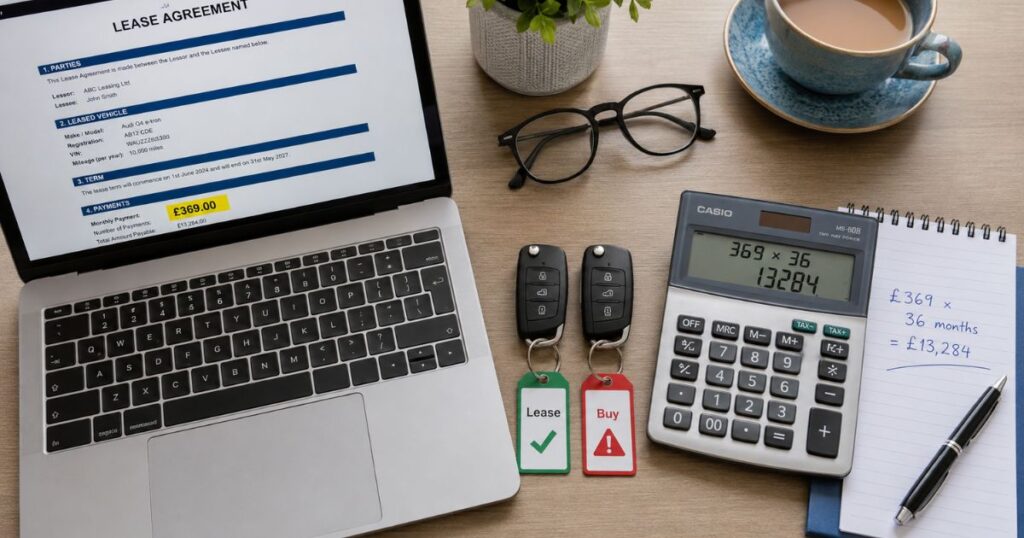
The median monthly lease price for an EV in the UK is now £369. For a comparable petrol car? £409 . That is £40 less per month for an EV, or nearly £1,500 saved over a typical three-year lease.
Some models show even bigger gaps.
| Model | Monthly Lease | Petrol/Hybrid Equivalent | Monthly Lease | Total Saving (3 years) |
| Dacia Spring EV | £199 | Dacia Sandero | £225 | £936 |
| Vauxhall Frontera EV | £279 | Vauxhall Frontera Hybrid | £303 | £864 |
| Citroën ë-C3 | £279 | Citroën C3 | £294 | £540 |
Source: Octopus Electric Vehicles
Add in lower running costs, and the savings grow further. Charging at home costs as little as 8p per kWh. At 3 miles per kWh, that is roughly 2.7p per mile. A petrol car doing 35mpg at current fuel prices costs about 21p per mile . Over 10,000 miles a year, that is nearly £1,800 saved annually just on fuel.
What About Business Drivers? The BiK Advantage
If you drive a company car, leasing an EV is a no-brainer.
Benefit-in-Kind (BiK) tax on electric cars is currently 3% of the car’s value for the 2025/26 tax year. From April 2026, it rises to 4% . Compare that to a petrol car, where BiK rates start at 15% and go up to 37% depending on CO2 emissions .
Let me give you a real example from Top Gear’s analysis. A higher-rate taxpayer (40% band) with a Golf GTI company car pays nearly £6,000 extra tax per year almost £500 a month. The same driver with an ID.3 GTX EV pays about £925 annually, or £77 a month .
That is not a small difference. That is life-changing money.
The Technology Factor: EV Progress Is Too Fast to Buy
Here is a truth that car companies do not advertise. EV technology is improving so quickly that any car you buy today will feel outdated in three years.
Battery energy density is increasing. Solid-state batteries are coming. Charging speeds that take 30 minutes today might take 10 minutes tomorrow.
When you lease, you do not care. You enjoy the car for two to four years, then hand it back and get whatever new technology has arrived. When you buy, you are stuck with outdated tech and a car that is worth far less than you hoped.
This is the same logic that made phone upgrade cycles normal. The same thinking now applies to cars.
The Truth About Battery Degradation Fears
Many drivers worry about EV batteries losing range over time. Some let that fear stop them from going electric at all.
Here is the reality. Most modern EV batteries come with warranties of 8 years or 100,000 miles, guaranteeing at least 70% of original capacity. Real-world data suggests batteries degrade slower than feared.
But here is the leasing advantage. Battery degradation is simply not your concern. The finance company owns the car. If the battery loses range faster than expected, that is their problem at resale, not yours.
This peace of mind is a genuine benefit that is hard to put a price on.
But There Are Downsides (Be Honest)
Leasing an EV is not perfect for everyone.
Mileage limits apply. Most leases are based on 8,000 to 12,000 miles per year. Exceed that and you pay 7p to 15p per extra mile. If you drive 20,000 miles annually, leasing might not suit you.
You never own the car. If you are someone who keeps cars for 8 to 10 years, buying outright might work out cheaper over the full cycle. But with EVs depreciating so fast, even long-term ownership is debatable.
Early termination is expensive. If your circumstances change and you need to end the lease early, you typically pay 50% of the remaining payments plus an admin fee. That can be thousands of pounds.
Condition charges apply at return. The car must be returned in good condition following the BVRLA Fair Wear and Tear guide. A scuffed alloy might cost £50. A dented door could be £200.
Be honest with yourself about your driving habits and your need for flexibility before signing any lease agreement.
How to Find the Best EV Lease Deal
Here is my practical advice for finding a good deal.
Check comparison sites. LeaseLoco, Select Car Leasing, and Nationwide Vehicle Contracts all let you compare deals across multiple providers.
Consider used EV leases. Demand for second-hand leased EVs surged 177% in March 2026 compared to the previous year . A used EV lease on a car that has already taken its biggest depreciation hit can be a bargain. A Dacia Spring used lease starts from £176 per month versus £239 new saving about 26% .
Look at total cost, not just monthly payment. Factor in the initial rental (often 3, 6, or 9 months upfront), mileage allowance, and any maintenance package fees.
Check if salary sacrifice works for you. Many employers now offer salary sacrifice schemes for EV leases. As a higher-rate taxpayer, you could save 40% or more on the effective monthly cost .
Final Thoughts
Electric car leasing UK has become the smartest way to drive an EV. Not because buying is impossible, but because the financial risks of ownership are too high for most people.
Depreciation is brutal. Technology is moving too fast. Battery fears, however overblown, add uncertainty. Leasing shifts all of these risks away from you and onto the finance company.
At the same time, lease costs have reached price parity with petrol cars. Some EVs are now significantly cheaper to lease than their petrol equivalents. Add lower running costs and BiK tax advantages, and the maths is compelling.
Leasing is not for everyone. High-mileage drivers and people who want to own a car for a decade should think carefully. But for most UK drivers, especially those using salary sacrifice or business contract hire, leasing an EV simply makes more sense than buying one right now.
Compare electric car leasing deals from UK providers today and protect yourself from the depreciation that is catching out thousands of EV buyers.
For more guides on lease vs buy decisions and provider reviews, The Diddy Blog is a best resource blog worth visiting before you sign any contract.